
The Future of Learning in Nigeria: Beyond Classrooms, Beyond Constraints
For decades, education in Nigeria has been framed around a single dominant idea: learning happens in school. It is delivered by teachers, structured by curriculum, and assessed by examinations. This model has shaped generations and produced many success stories. But it has also revealed deep limitations.
Today, Nigeria sits at a quiet but consequential inflexion point. Learning is increasingly moving beyond the classroom. Not as a distant prediction, but as a lived reality shaped by technology, community initiative, economic pressure, and youth creativity.
The question is no longer whether learning will happen outside school. It already does. The more urgent question is how Nigeria prepares for a future where learning is blended, decentralised, and deeply connected to real life.
The Shift Has Started, But It Is Uneven
Across Nigeria, the evolution of learning is happening in layers, often unevenly, sometimes informally, and rarely by design.
Digital tools are expanding access, but not equally
Smartphones, messaging apps, recorded lessons, offline learning tools, and online communities are opening new pathways for students to learn beyond school walls. Many young people already supplement classroom learning with YouTube explainers, WhatsApp study groups, and self-paced digital courses.
Yet access remains deeply unequal. Data costs, unstable electricity, device availability, and varying levels of digital literacy still limit who benefits and how much. For many learners, digital learning is a support system. For others, it remains out of reach.
Community-based learning is quietly growing
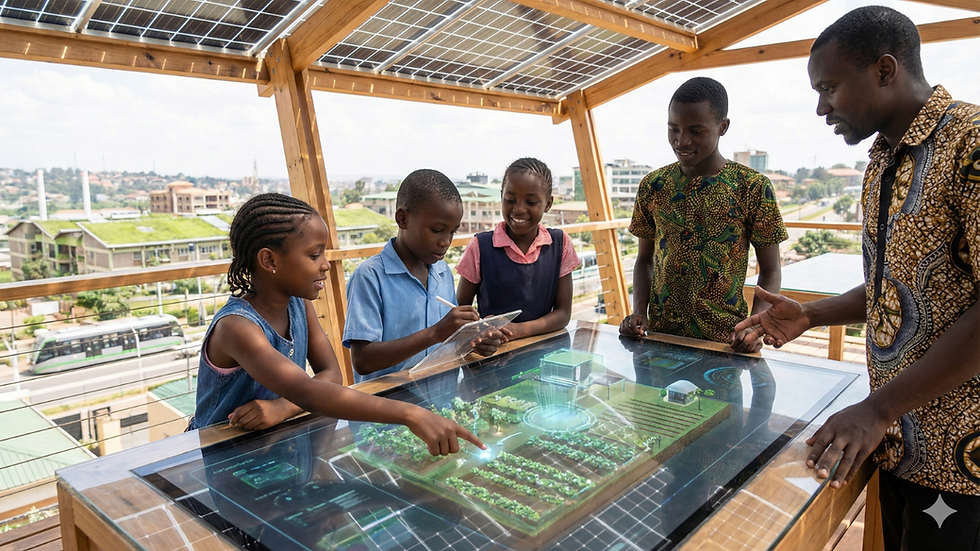
Across cities and rural communities alike, learning is happening in spaces that were never designed as schools. Faith centres, youth hubs, libraries, innovation labs, NGOs, and community clubs are providing mentorship, life skills, creative exposure, and vocational pathways.
These spaces often respond faster than formal institutions to the needs of young people. They are culturally grounded, locally relevant, and often more flexible. Yet they are under-recognised, under-funded, and rarely integrated into formal education planning.
Real-world exposure is becoming education
Internships, apprenticeships, volunteering, youth advocacy, field projects, and peer learning circles are teaching Nigerian young people teamwork, leadership, problem-solving, and resilience. These experiences often shape confidence and employability more directly than academic credentials alone.
For many youths navigating limited job opportunities, learning is increasingly tied to survival, adaptability, and practical value. This reality is reshaping how education is perceived.
AI is rewriting the learning curve
Artificial intelligence tools are beginning to influence how learners access information, practise skills, and express creativity. For motivated learners, these tools can accelerate understanding and personalise support. Without guidance, however, they can also confuse, mislead, or overwhelm.
In Nigeria’s context, the promise of AI is real, but so is the risk of deepening inequality if access and digital ethics are not intentionally addressed.
Learning is already happening everywhere. But the quality of that learning, the equity of access, and the capacity of communities to support it vary widely. That imbalance is what makes this moment critical.
In Ten Years, Learning in Nigeria Will Look Very Different
If current momentum continues, Nigeria’s learning landscape over the next decade will be shaped by several clear shifts.
1. Learning will be blended by default
Schools will remain essential, but they will no longer be the sole gatekeepers of knowledge. Learning will increasingly combine classroom instruction, digital resources, community engagement, and real-world application.
The school will become one node within a broader learning ecosystem rather than the centre of it.
2. Skills will matter as much as content
Employers, entrepreneurs, and civic leaders already value adaptability, critical thinking, communication, digital fluency, empathy, and creativity. These skills are built through practice, collaboration, and problem-solving, not memorisation alone.
Education systems that fail to balance knowledge with skill development risk leaving learners unprepared for real economic and social participation.
3. Communities will become learning environments
Parents, mentors, artisans, technologists, creatives, faith leaders, and local organisations will play more visible roles in learning. Education will become more contextual, culturally grounded, and tied to local challenges and opportunities.
This shift has the potential to strengthen relevance, belonging, and accountability.
4. Technology will widen or close the gap
Digital platforms and AI can reduce barriers to quality learning if access, safety, and guidance are prioritised. If not, they risk widening the gap between learners with resources and those without.
Technology will not be neutral. Its impact will depend on the choices Nigeria makes.
5. Young people will become co-creators, not passive recipients
Future learning models will increasingly treat learners as active contributors. Young people will design projects, lead initiatives, explore their interests, and build portfolios that reflect growth beyond exam results.
Agency, not compliance, will define meaningful learning.
What This Means for Nigeria’s Education Stakeholders
For educators, nonprofits, policymakers, donors, and organisations working in Nigeria’s learning ecosystem, the implication is clear. The future is not about replacing classrooms. It is about expanding them.
This requires:
Supporting teachers with digital skills and learner-centred pedagogy
Investing in safe, inclusive community learning spaces
Designing hybrid models that combine structure with flexibility
Integrating real-world experiences into formal learning pathways
Ensuring technology acts as a bridge rather than a barrier
Elevating youth voice, curiosity, and agency
Education cannot be confined to a building. Nigeria’s social, economic, and cultural realities demand learning systems that are adaptive and human.
A More Realistic Big Idea
The central message is not futuristic or abstract.
Learning in Nigeria is already expanding in practice. The systems meant to prepare the next generation must expand with it.
This moment is not about idealism. It is about alignment. The next ten years will determine whether Nigeria harnesses this shift to broaden opportunity or allows existing gaps to deepen further.
The Call to Action
If Nigeria wants its young people to thrive in an increasingly complex world, it must start building learning environments today that are flexible, community-powered, technology-enabled, and deeply human.
Learning will happen anywhere curiosity finds room to grow. The responsibility now is to ensure those spaces are intentional, inclusive, and supported.


Comments